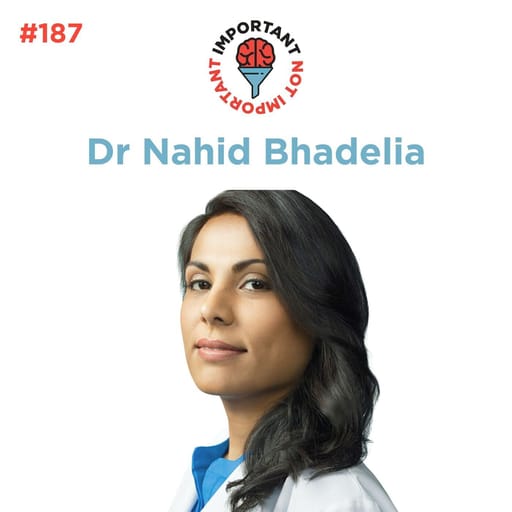
Transcript 0:00 [upbeat music] It's Quinn. 0:07 Maybe you're like me, and sometimes you just spiral out, not just because everything is a lot all of the time, but because some part of you actually wants to do something about it. 0:18 But, I mean, holy shit, where to start, right? Great news. We built an app for that. It's called What Can I Do? Even better news, it's free and it's fast. It takes just three clicks to start unfucking the world. 0:32 Visit whatcanido.earth to get started for free. 0:36 [upbeat music] I have been avoiding this question for quite a while. 0:51 I even wrote a few thousand words about it a couple months ago and didn't publish it 'cause it was a bit of a downer. 0:59 But that's kind of malpractice in a way, 'cause we promised we don't shy away from the hard stuff, even if the goal is to help you understand what you can do about it. 1:08 Just like there's never really an optimal time in your life to get married or have a baby or get arrested, there's never a good time to talk about bird flu, which means it's always the right time to talk about bird flu, and especially when you've got the best of the best on the line. 1:24 So today, let's do this. What can I do about bird flu? That's today's big question, and my returning guest is the wonderful Dr. Nahid Bhadelia. Dr. 1:34 Bhadelia is the founding director of the BU Center on Emerging Infectious Diseases. She is a board-certified infectious diseases physician and an associate professor at the BU School of Medicine. 1:46 She served as the senior policy advisor for Global COVID-19 Response for the White House COVID-19 Response Team in twenty twenty-two and twenty twenty-three, where she coordinated the interagency programs for global COVID-19 vaccine donations from the United States. 2:00 Nahid was also the policy lead for Project Next Gen, a five billion dollar, uh, health and human services program aimed at developing next-generation vaccines and treatments for pandemic-prone coronaviruses. 2:12 She also served as the interim testing coordinator for the White House Mpox Response Team and is the director and co-founder of Bio Threats Emergence Analysis and Communications Network, or BEACON, an open-source outbreak surveillance program. 2:29 [upbeat music] Welcome to Important Not Important. My name is Quinn Emmett, and this is science for people who give a shit. 2:36 In these weekly conversations, I take a deep dive with an incredible human who's working on the front lines of the future to build a radically better today and tomorrow for everyone. My mission here is simple. 2:47 It's to help you answer the question, what can I do? [upbeat music] Nahid, welcome back to the show. It's always such a good, good sign when, when we're on the phone. 3:02 By which you mean it's usually not a good sign because- Yeah. -there's some biological threat on the horizon. I'm sorry, Quinn. No, no, no. It's okay. 3:09 It's-- I feel like we should have, like, a, like, an after-hours show where we talk about literally anything else. [laughs] Science fiction. How about that? We should talk about science fiction. Science fic-- Great. 3:18 All right. I'm in. Let's do it. It'll be amazing. Anyways, so today we're here. We're gonna talk about what is culturally referred to as bird flu, but obviously it is flu season, standard flu season. 3:31 We are in the mid to latter stages of COVID in a thousand different ways. I would like to actually dial this down to basics, if we can, to start with so that we really feel like everyone can get on the same page. 3:42 'Cause again, I feel like this is something I've been avoiding calling you about for a while, and it just feels like, well- [laughs]... there's never a good time. 3:49 So if you don't mind, let's really m-make this basic for folks. So what is this thing that we call bird flu? 3:56 So Quinn, bird flu is avian influenza, and particularly the avian influenza we're worried about is influenza that's circulating in wild birds that can get transmitted to other birds, domestic birds, and now we're seeing in many mammals. 4:12 There are many, many different types of avian influenza. The ones we're concerned about are the ones that we call highly pathogenic influenza. And you hear this alphabet soup of H5N1, H7N7. There's all these numbers. 4:27 What those are referring to are the protein markers on all these different viruses from the same family. They have different types of capacity to infect different species. The bird flu that the U.S. 4:40 has been mostly affected with over the last couple of years that we're concerned about is a highly pathogenic avian influenza called H5N1. 4:49 So the H refers to hemagglutinin, the N refers to neuraminidase, and the numbers just refer to the type of those protein that's on this sneaky little virus. 4:58 And the troublesome thing, and really something that's been really bothering a lot of folks, both on the animal side as well as human health side, is that H5N1, which we've known about for a couple of decades, and in fact, WHO has tracked about a thousand cases of H5N1 globally, of which half of those have resulted in a mortality. 5:21 And traditionally, those outbreaks have happened on poultry farms in different Asian countries, and the symptoms of those are usually a pneumonia. 5:30 In a more severe setting is a pneumonia, respiratory distress, you know, so like a very severe version of a flu. This particular H5N1 has been baffling. The outbreak here in the U.S. 5:41 has been baffling because it's against this, like, steady march where H5N1, which used to infect birds, and once in a while a human may come in touch with an infected bird and they may get infected. 5:52 And there's even cases where there might be very sporadic cases of potential human-to-human transmission. 5:57 So there has been, like, small potential cases of human-to-human transmission, but there hasn't been sustained human-to-human transmission, which would be the worry that we have that something might become a public health emergency. 6:08 Here in the U.S., we saw H5N1 first in twenty twenty-two. It affected birds and then infected a human and again led to respiratory symptoms. 6:19 And then last spring, this virus, which has, in this period of time now, been on almost every continent, including Antarctica, has learned how to infect mammals, over forty species of mammals, and that matters to us 'cause we're mammals.And it's been wiping out all these different mammalian species, bird species, wild bird species. 6:40 It has been killing animals in the wild, affecting cats, right? And so it's not just the H5N1 that's of concern, but we're seeing a steady march of many of these different types of avian influenzas. 6:49 And the H5N1 here has now jumped from a bird into a cow last December or January at some point, we think, and that's led to outbreaks that led to the first human to get infected with this particular genotype that's on farms, dairy farms, in, I believe it was March of twenty twenty-four. 7:09 And now it's created an environment where this virus is all around us. Many humans work with farm animals, and if they're infected, uh, the farm animals could transmit to humans. 7:19 So we're seeing an increased number of humans who are now getting infected with avian influenza. 7:24 The good news is, so far, majority of the cases have had milder symptoms than what we've seen traditionally with H5N1, which is a scientific mystery unto itself that we can talk about. Mm-hmm. 7:34 But we've had a recent death, which is on a slightly different genotype of this virus, H5N1, which did cause a death in a person in Louisiana who was exposed to their own backyard flock and some wild birds that were carrying this. 7:47 Okay. Well, that helps. It all sounds like it's going great. Really appreciate it. So like you said, a bunch of different types of avian flu. H5N1 is the particular one we're operating with now here. 8:01 Am I getting that correct? Yes. Okay. And is the same variant, like you said, it went from birds and now cows and mammals and cats are quite the issue as well. Is that all the same one, H5N1, as far as we know? 8:15 Yes, yes, but of course, nothing is simple. Right. And even within H5N1, there are different genotypes and then subgenotypes, right? 8:23 And so the genotype that's circulating on dairy cows, the B.13.3, is different than the genotype that caused the severe illness in the teenager in Canada- Right... as well as the death in Louisiana. 8:36 That's, uh, D one one. How different are they from each other? 8:41 Small genetic changes, but enough that they manifest, you know, slightly differently in terms of severity of disease that really, you know, goes to show you why it's so important for us to not just track where the infections are across different species, but also really get down to the nitty-gritty to figure out what the genetics of each of these infections are. 8:59 Okay. So obviously, you know, [laughs] like I just told you, my kid's school just called. It's January. It's flu and everything else season if you have children under ten. Everything is fair game. 9:10 How, I guess, practically, as far as we know so far, operating in the real world, does H5N1 differ from the seasonal flu that we're dealing with at least this year, this version of it? 9:22 You know, I guess, what should people be thinking about on that front? Yeah. So I'll start with the similarities. 9:28 Influenza viruses in general are really good at mutating and reassorting, which means that when multiple types of influenza viruses affect the same host, they can reassort into themselves, into a new species, right? 9:42 So the seasonal influenza that's circulating is good at infecting humans and transmitting between humans. The avian influenza has not thankfully picked up that, you know, sustained human-to-human transmission capacity. 9:55 The avian influenza traditionally has caused higher mortality than what we potentially see in seasonal influenza. We have a lot more immunity against many of the circulating influenza strains, and we have vaccines. 10:07 What we don't have is as much experience, genetic experience, our immune system hasn't had as much experience with H5N1. 10:14 And not only that, but we don't have readily available vaccines against that, so the concern is that if the virus were to change a little bit and become human-to-human transmission or get better at infecting the upper airways of humans, we might see a, a bigger outbreak than what we've seen with seasonal influenza. 10:30 The scariest thing is that you have enough of the H5N1 circulating and the flu circulating, and if the same person gets both of these, there might be reassortments, right? It doesn't even have to be a person. 10:42 It could be an animal. Mm-hmm. If you have these circulating influenza strains in humans as well as this H5N1, that they can merge to become something that's a super avian influenza they can transmit between humans. 10:54 Gotcha. Okay, and that's interesting. We were just talking about really getting into the specifics of context of vaccines, which you just mentioned. Let's talk about that. 11:05 H5N1's been around, versions of, of avian flus have been around. What do we have prepared, if anything? And is that based on an older version, or what are we working on, et cetera, et cetera? 11:15 Just kind of lay it out for me if you could. Yeah. Yep. 11:19 So in terms of what we have for vaccines, you know, thankfully with government investments over the years, we have older stockpiled versions of cell-based vaccines called... 11:30 One example is the Audenz vaccine, which is CLS, Seqirus is the company that manufacture. But the older versions are not a perfect match for the current strain. 11:40 But we do have candidate vaccines that are now matched to the current circulating genotype. They are in manufacturing, they're in development, but they have not been approved yet. 11:50 And for them to get an approval, the manufacturers would have to develop enough data about immunogenicity. 11:56 So that means, like, how much of an immune response does these vaccines get, which translates to how good they could be to ready your immune system, uh, to potentially fight off a severe infection. 12:06 And then the second thing they need to show is, you know, continued safety profile, which many of these platforms, vaccine platforms, that the new vaccines are being created are platforms that we already know about. 12:16 Mm-hmm. So really it's the immunogenicity data and potentially some clinical efficacy data that would be needed for an approval. 12:23 Now, if we don't have the full approval, what we did with COVID-19 vaccines, as you know, is that when you have a public health emergency or enough public health concern, you could have something that has really promising immune data and safety profile that you could release, 'cause it's a much longer process to get a full approval. 12:40 You could release emergency use authorization of safe available vaccines. Mm. We, we don't yet have that for the current vaccines either. 12:48 So currently the access to these new vaccines would mostly be under research protocols.Gotcha. Okay, this is all super helpful. Thank you. I, I, I really appreciate the, the context for all this. 12:59 Again, like, people have a, a bit of a, a language for this now, but at the same time, there's, you know, just a-as usual, just wild amount of misunderstandings and, and misinformation, and, and obviously science keeps changing. 13:10 That's the way it works. 13:12 So before we get to human transmission and, and, and more about, I guess, uh, human vaccines and, and how we might be operating with that, let's talk about where it is now, which is really seems to be just fighting its way through these dairy herds. 13:27 And I know that dairy is not, not your specialty, nor, nor mine. From my very limited surface level understanding of this, it seems like this is not an industry, the U.S. 13:38 dairy industry, that is prepared for the, the monitoring, testing, and eradication, much less vaccination of herds of cows. 13:48 They're raised in a million different ways in these huge farms and the way barns are built and open air and all this thing. Do we have any sort of opportunity to try to cut this thing off where it is now? 13:59 What are we looking at there? How should I think about that? Yeah. The ideal goal of all infectious diseases, right, is that we can eradicate it, which means we can just make it so that it's not, it's not anywhere. 14:10 That's not a possibility. H5N1, like I mentioned, is in so many species on so many continents, and many other avian influenza are as well. So you can't actually eradicate it, which is take it off the face of the earth. 14:21 The only other disease, two diseases that we've done this with, actually, one is smallpox, and then rinderpest, which is not a human disease. So really just one human disease has been eradicated in the past. 14:31 And the only way that we could do that is because humans were the only host. 14:35 So our best guess, and, um, I did a workshop on National Academies, which focused on, like, what should our goals be in some ways for research that could affect our response. 14:45 And the consensus was, you know, our goals should be really to decrease human infections and to protect our food security. 14:52 And the way that we do that is to, of course, track where these infections are, and we try to eliminate them, which is just get them out of a certain area, not to completely eradicate them. 15:02 Eliminate them as much as we can in domestic animals. 15:05 That's also gonna be a tall order because so many states have farms that are affected by this, and hundred and thirty-three million birds, wild birds, commercial poultry, backyard flocks, have been affected by this virus since twenty twenty-two. 15:20 So eliminating it from all spaces where humans are is gonna be hard. And the best way that we can do this is stay ahead of figuring out where is the virus currently that we can keep the humans away from. 15:32 Eliminating it in, in cows by testing cows in herds, testing humans that come into contact, quickly reporting illnesses so they don't spread, right, to other humans. 15:42 And I think we do need to do a better surveillance of, of wildlife and wild birds. 15:46 Some of this is already being done, but wild animals, we're a little bit worse in terms of tracking some of these, you know, in general, infectious diseases. 15:54 And it's, uh, wildlife surveillance is, is one that we lack on. The second thing we need to do is be ready, like, if this virus changes, right? So first we gotta protect the humans who are at risk right now. 16:05 And in my mind, yes, dairy farmers and poultry, commercial farm workers have been the ones that have been at highest risk, but we're seeing an increased number of what we call sporadic infections, which is infections that go animals to humans or birds to humans, which are not just like human-to-human transmission, but we're seeing an increased number of those that are also posing at least individual risk, right? 16:27 The woman who became sick in Louisiana was not a poultry farmer, was not on a dairy farm. She was just in her backyard with a backyard flock, right? But- Mm-hmm. She had a risk factor, but it's a different risk factor. 16:38 So I would say, you know, we need to increase our pool of people that we think are at risk to include anybody who might be coming in touch with infected animals and birds. 16:47 Someone asked me a question about bird feeders the other day on an interview, and honestly, like, particularly if you're in a state where there's, like, a ton of H5N1 outbreak on farms and activities, you know, and, and birds, I would not put out a bird feeder because you may know well to not touch dead birds and sick birds. 17:02 But if you have kids and you have bird feeders- Mm-hmm. You don't want your kids interacting with potentially sick or dead birds that the bird feeders may attract them to. 17:10 So those kinds of things where we just have to increase our awareness of our interaction with animals. No, a hundred percent. 17:16 And you know, I always come back to, I guess, what is the most scalable version of that, knowing the practicalities, the limitations of current health departments, the local, state, federal level, future ones that start next week, and things like that, but also, you know, just what have we learned in the past five years. 17:32 You, you mentioned maybe don't put out a bird feeder if, if, if there's quite a bit of H5N1 in, in your area among flocks or cows. Is something like wastewater able to... 17:44 You know, the, a lot of these dashboards have been built out and, and, you know- Yeah. Funding kind of goes back and forth. But is, is that able to pick up on the H5N1 signal, or is there anything reputable? Yeah. 17:55 So there's a few ways to sort of track infections, and wastewater is helpful. 17:59 The trouble is in, in many cases, the wastewater that we collect, it comes from right where there's runoff, and we-we're collecting fluid from all these places. 18:08 But where the infections may be, there may be no good collection sites or- Sure. You know, right, there may not be pooling enough of- Yeah. The wastewater for us to get a sense. 18:17 Or they may be, you know, in areas where there are farms, for example, and you can't, if you find the virus in wastewater, you can't tell if it's a human infection or an animal infection or just contaminated milk. 18:27 There's some stories about raw milk being dumped into, you know, wastewater, and that kinda has a positive signal. It's still important information, but it's not specific to tell you, like, who has the infection. 18:38 It kind of points you to the fact that there's H5N1 activity going on. The other way that H5N1, the surveillance is happening is by people just coming in with symptoms, right? 18:49 And if they're positive for the flu, particularly for influenza A, and they're coming in with the right epidemiological background, those samples, influenza samples, are being sent to do genetic testing on to make sure it is not H5N1. 19:03 And last night, CDC released a HAN that basically said we should try to, at least for everybody who has been severely ill or hospitalized or in the ICU with influenza and has influenza A, we should be sending that kind of genotyping. 19:17 And I think that's critical, Quinn, because, you know, influenza season's gearing up. We all of a sudden have all these H5N1 cases in the background. We wanna be able to pick those up and separate them- Mm-hmm. 19:28 From seasonal influenza for the reason that we talked about, which is that reassortment bit. We don't want people, right, to get multiple seasonal influenza cases and H5N1 going on at the same time. Mm-hmm. 19:39 And you can help with that issue as a general public by taking your flu vaccine, which will hopefully, you know, not make you severely ill from seasonal flu and potentially reduce the chance of, of this kind of reassortment in a, in a sicker person.Sure. 19:53 Two questions off that. One is, one is a, a mini side quest, but it should be s- pretty straightforward. 19:57 If, if you've followed the, the seasonal flu over the years, we know that the, the vaccine has kind of been a bit of a guessing game ahead of time. How effective is this year's seasonal flu vaccine? 20:08 Just table stakes, everybody [laughs] should get it anyways, and many more people should get it than do, but I'm just curious for my own. I haven't kept up with that. Yeah. 20:17 I, I think that there's a variability every year. Yeah, yeah. I think we'll have a better sense. So we will have a better sense of the match. You know, of course, it's, the flu season is just ramping up now. 20:28 But the thing that they do without fail is that they can play a big role in re- reducing severe illness. 20:34 Seasonal influenza already causes hospitalizations, right, and, and deaths every year, even before we start talking about any other s- other emerging infectious diseases. 20:43 Just going back to this H5N1 issue, one of the other ways that I think we can protect farm workers, and, and the government has tried to do this, is, you know, one other surveillance way is bulk milk testing. Mm. 20:53 So since we know a lot of the farms are affected, federal government and USDA has been working to where all the milk is collected. Again, you know, out of my depth here a little bit- Yeah... 21:04 because [laughs] I'm not in the farm industry. But a lot of the milk is pooled together in bulk from different farms or different areas, right? 21:11 And then it is sent to pasteurization processing, and then it's put into national circulation. And so people should know that as long as you drink pasteurized milk, that is safe. 21:19 Raw milk may have the virus, and it could make you sick, but it also has all these other bacteria that- Mm-hmm... are not safe. 21:25 So the, the bulk milk testing strategy then allows the government to have a better sense of what farms may be infected without having to test every single cow or every single farm. Mm-hmm. 21:37 But I think that we do need a... Every state's been different, right? 21:41 So we have a federated public health system where the federal government is responsible for large programs, providing technical guidance, investing in research, but the implementation at the local level is done by state and local p- public health bodies. 21:55 And so states are kind of choosing their own path. They're getting resources, they're getting guidance, but they're really choosing their own path. 22:02 And states have been variable in how good they have been in trying to track this infection, partly because we're talking about a food industry, right? 22:10 It's very integral to, to us, and it involves private producers who have a stake. If all of a sudden you find virus on a farm, that affects your productivity. 22:20 And in fact, you know, some of the biggest expenditure during this outbreak has been the federal government recompensation for farms that have lost animals or milk production because- Mm-hmm... of what's been happening. 22:32 Hello, hello. Malcolm Gladwell here. On this season of Revisionist History, we're going where no podcast has ever gone before. In combination with my three-year-old, we defend the show that everyone else hates. 22:46 I'm talking, of course, about PAW Patrol. There's some things that really piss me off when it comes to PAW Patrol. It's pretty simple. It sucks. My son watches PAW Patrol. I hate it. Everyone hates it, except for me. 23:01 Plus, we investigate everything from why American sirens are so unbearably loud, to the impact of face blindness on social connection, to the secret behind Thomas' English Muffins' perfect nooks and crannies. 23:14 And also, we go after Joe Rogan. Are you ready, Joe? I'm coming for you. You won't wanna miss it. Listen to Revisionist History wherever you get your podcasts. 23:29 So there's this economic component, and then the other thing that makes it complex is that many of the farmers and workers on these farms are from a vulnerable population. Mm-hmm. They may be migrant workers. 23:38 They may be undocumented. They may have language barriers. They may not have access to healthcare baseline. 23:43 So tracing this infection in humans has been difficult due to all this complexity because humans may not want to come forward with an infection, particularly if it's mild, because they don't want to lose their job. 23:54 Well, and that's the thing, right? 23:55 Just like, you know, heat sickness for peaches in Georgia or COVID or this, you know, we can talk about the protein parts, or we can go all the way down to, to the human factor, which is these folks, many, many, many of these folks don't have any protection at all and don't want to and cannot lose their jobs, much less often express themselves in the most specific ways. 24:16 So, and like you said, how scalable is that when you're dealing with the human component versus, you know, it sounds like bulk testing milk is almost a version of wastewater but almost more accurate because as opposed to, like you said, H5N1 in any given water supply, we don't really know what put it there versus testing milk, which really seems to narrow it down quite a bit. 24:38 Yeah. It's a complex situation, right? Mm-hmm. Public health is never easy, and- Yeah... particularly emerging infectious diseases that don't pose current public health emergency, but they have the potential. 24:48 I think talking in nuance about risk, this is something- Mm-hmm... else that I've been on for the last year, is just, like, how do we communicate about risk that is not an emergency? Mm-hmm. But it could be, you know? 24:58 [laughs] Well, and that- And sometimes does... it's so funny. My, my sixth grader came home, and as usual, I ask him, "What'd you do today?" "No much," and doesn't give me much. 25:05 And then I try to dig in and get some details, and he tells me they're starting to work on probabilities. 25:10 And I was so excited [laughs] 'cause I was like, "No one in this country understands prob- we have to learn how to think probabilistic thinking." He was like, "All r- all right, man." 25:18 I was like, from driving down the road, I'm worried about other drivers, to, to infection, whatever it might be. And that's the same thing as the flu vaccine. 25:24 A- any protection is better than no protection certainly, and it varies from year to year, and we'll know more later. It was very frustrating when COVID started, and people said, "Oh, well, it's just the flu." 25:33 And it's like, the flu's not great, you know, as it is. Mm-hmm. 25:36 Like, it causes a lot of, especially in young kids and, and the elderly, like, a lot of severe disease, and obviously post-viral symptoms that we've been dealing with in, in long COVID stuff there as well. 25:47 So, you know, anything you can do to protect yourself would be great because, again-Probabilities. 25:52 You mentioned, listen, if you've got the symptoms and you're going in and, and they're testing you for flu, we should be sending that off to also test for H5N1. 26:00 What stage is that H5N1 testing in for, for humans that have those symptoms? Is it pretty centralized like early COVID? Sort of what are we looking at now- Yeah... and where might that go? 26:11 So thankfully because of COVID, we have a stronger laboratory response network, the LRN, and we also have commercial labs that have the capacity to do specific genotyping. 26:21 So the capacity and the availability of tests, at least, as you said, a little bit more centrally is, is there. It's, it's, it's in great amount. 26:31 What's potentially missing is that, you know, it takes time to identify somebody who may be sick, to send that test out to get the result back quickly. Mm-hmm. 26:39 Because the way that we would respond to H5N1, potentially even an outpatient person, is that we w- don't give Tamiflu to every person who's in the outside who has the flu. But we would- Mm-hmm. 26:50 We have been giving Tamiflu or oseltamivir, which is the antiviral to people who have H5N1, and we've been giving it as a post-exposure prophylaxis to those who have maybe been exposed to somebody who had this infection. 27:01 And to make that effective, you actually need to be able to give that antiviral pretty quickly. 27:06 If someone is sick after a diagnosis, it takes a long time to identify, then you kind of miss that window, uh, and potentially a chance to keep that person from getting super sick. 27:16 So the, the issue has been that the testing is there, it just is not tight enough. You know, availability is not the same thing as accessibility. Sure. 27:25 So ensuring that the protocols are there tightened enough so that we can get rapid turnaround tests or potentially moving the tests closer to the patients. Mm-hmm. 27:35 Many hospitals can do genotyping for known cases of influenza. Yeah. So the circulating subtypes, you know, the hospitals can sort of say, "Yes, this one's H- influenza A H1N1." They can do that on PCR. 27:47 That availability is not available at all hospitals for H5N1. 27:50 So one way to potentially increase the turnaround time or decrease that turnaround time would be to make that closer to where the patient is so it doesn't need to leave the hospital- Mm-hmm... 27:59 laboratory and go somewhere else. The other is if you had rapid tests, and that's particularly... rapid tests might particularly be helpful on farms, right? We talked about- Mm-hmm... 28:09 the barrier to getting tested or fear of getting tested, but what if you could get influenza tests, you know, maybe even H5N1 specific rapid tests developed? 28:19 I'll talk about what rapid tests are available, that you just hand out to people, and you leave it to them to potentially say, "I'm positive, I should just go get care," right? Like- Mm-hmm... 28:28 I, I think that having that empowerment and making those rapid tests available would make a difference. 28:32 If we created that for animals as well, particularly for the folks that are, the, the animals that are on the farms, we could test them. 28:41 Maybe we could keep them isolated, quarantined way faster so humans don't get exposed to them. Mm. So, and it would be cheaper than actually collecting these samples. 28:50 Hopefully, you can drive it down the cost to be cheaper so that you don't have to send all those samples centrally. So we're at a place where we have rapid tests for flu A, flu B, COVID 19, uh, COVID 19 and RSV. Mm-hmm. 29:02 There's one that's approved. 29:03 The problem is they're so expensive that they're not available enough for them to make a difference in the general population's choices of life, if you will, like our everyday decision making. 29:13 Even if we were to make influenza A tests available more broadly, make it cheaper, improve uptake, population uptake, we could potentially identify these cases. It doesn't... 29:24 in my mind, it doesn't have to be H5N1 specific. I think if you pick up you have flu A and you have the right risk factors, you know, we just gotta educate. We gotta get the patients to care. 29:32 God, it just brings back so many memories, and I'm sure, I mean, this has been- I know. Are you reliving?... your whole life, but for the rest of us, we're just like, "Oh boy, I remember, I remember how this goes." 29:38 Are you reliving COVID-19? [laughs] Oh, yeah. Yeah. Super fun. Super fun. 29:42 But I, I do know, you know, a- again, from the world's most limited conversations, I know that there is a practical difference here, b- besides, you know, getting into the nitty-gritty details. 29:52 But I guess for people out there, [laughs] especially people with disgusting children like mine, what do we know about... and again, I know that human transmission is not there yet. 30:03 Whatever the opposite of growth mindset is there. 30:05 But as we know, is it obviously, you know, Lin- Lindsey Marr was one of the first to talk about COVID being airborne, and then we discovered that that was obviously a big piece of the puzzle. 30:15 Talk to me about how H5N1 works, because I understand it's been passed probably on farming equipment, so is it more like a, like a norovirus or influenza? Yeah, yeah. How does it get transmitted? 30:26 Oh, so that, this is one of the great mysteries. 30:28 We, I mean, we have some idea, but one of the scientific questions that came out of the National Academies workshop that I did was getting a better sense of where this virus is and how it's transmitting. 30:38 So we have some sense that a lot of the infections on farms are happening due to exposure of humans to animals, and that might be through handling of raw milk. 30:49 So a lot of this virus in cows is concentrated in the udders- Mm... and in the milk, and not as much in the respiratory or other muscles. 30:56 And so the presumption is that, you know, people who are working with cows or milking cows or touching contaminated milking equipment or, uh, you know, infected cows and udders and then touching themselves. 31:07 That's why personal protective equipment that covers the eyes, you know, potentially covers the mucosa, is helpful in helping reduce that transmission to humans. 31:15 'Cause what we're seeing is that the disease is presenting then with like conjunctivitis, which is inflammation of the eye. Mm. 31:20 Um, and that, that might be why it's milder, is that it's not getting transmitted to the respiratory route, it's trans- getting transmitted through this touch. And, and regular influenza, right? 31:29 Seasonal influenza gets transmitted through droplets. That means like people sneezing, leaving, you know, snot around, touching surfaces, and then, then other people touching surfaces and then touching themselves. 31:40 So that's usually the way it is, is it's droplet and it is contaminated surfaces. 31:45 And with this, with H5N1 so far, one would presume that at baseline there is a capacity for this virus to transmit through droplets as well because it is an influenza virus. But we have not had enough studies. 31:58 We don't have enough studies to figure out how transmissions are happening with certainty between animals and humans, and then also between animals. There's a- Mm-hmm... some evidence that the virus is making it from... 32:10 you know, it made it through a bird into a cow, but now it's transmitting from the cow back to birds, and in some cases from cow to cats, as you mentioned. Then- Right... 32:18 a lot of times in those cases there has been contaminated milk, and the cats have actually had, um, really bad neurological disease and many, many of the exposed have died.Fascinating. Fascinating. All right. 32:29 This has all been e-extremely helpful, and I don't wanna take up all of your day when, when you're doing this all day. But, um, as always, I wanna try to get the straight record out there as much as humanly possible. 32:40 So what questions have I not asked? What have I missed sorta on the practical, where we are, where we may be going in the short term? Yeah. I think the two questions that people have are, "Will this become a pandemic?" 32:51 And- Yeah... uh, "What is the risk to me right now?" Yeah. So can this become a pandemic? Yes. That's the concern. That's why everybody's concerned. Will this become a pandemic? We don't know. 33:01 When will it become a pandemic? We don't know. Mm-hmm. And it's communicating this idea that we're in a space where there's an increased risk of potential, pandemic potential. 33:10 The CDC ranks this as a moderate risk for potential, this particular H5N1. That means it could happen, right? It's not baseline, but it's not right now. There's no human-to-human transmission. 33:22 But in my mind, you know, this, the second question of like, so what will it take for this to become a pandemic? 33:27 For the virus to evolve, and the virus would have the capacity to evolve if it gets exposed to enough humans, it mixes with seasonal influenza, if it, it gets exposed to immunocompromised patients in which it might have more chances of evolution, viral evolution, to potentially take on, right, more characteristics. 33:44 If it's enough, mixes in enough animal vessels, right, where all this is transmitting, where the same thing may occur. 33:50 And it just needs, you know, recent studies have shown that actually the barrier is not as high as we thought. It may not need as many mutations as we thought. 33:58 So really reducing human infections and, you know, keeping animals and humans separate as possible is, like, a big part of what we need to think about. The second question people have is like, "What's my risk?" Right? 34:09 Yeah. So I would say this is where it's tougher to communicate. I would say the risk for the regular public remains low but is not as low as it was last year. Mm-hmm. And that's the nuance that I think is missing. Sure. 34:22 Because we need to sort of talk about even the low risk in different levels, where we have to say that it's in general low risk, but it's not as low as before. Mm-hmm. 34:31 And the reason why is 'cause there's so many animals affected and, you know, the wild birds, you know, backyard flocks. 34:39 I, people who work with wildlife, in addition to farms, dairy farms, and poultry workers, I think that we need to pay attention to those spaces because I, I can tell you with great certainty we're gonna see more sporadic infections in humans over the next year. 34:53 And probably we're gonna see more of them than we have, partly because there's just so much virus and so much opportunity for an infected animal to interact with a human. 35:02 And in so many, not just the volume of animals, but new and different kinds of animals. Is, is that right? And, and the geographic scope, right? Right, right. 35:12 The concern with that D11 genotype that made the Ca- Canadian teen sick and also the death in the Louisiana patient, I mean, in both cases there was exposure to birds who were infected. 35:23 But think about a scenario that would need to happen for two birds with D11 and so far apart to both have those infections and both be able to find a human and infect them. 35:35 There are all these safeguards, right, all these events that need to happen, which means the denominator. As if you're a probability person- Mm-hmm... 35:42 you have to say that there are many more birds that have D11 out there than we think they do. Right. It cannot be isolated to those two. That's almost impossible. Exactly. 35:51 And that's my concern, I think, in terms of where we're at in the situation. 35:55 I wanna ask sort of one last relevant but slightly different question, but before I do, you alluded a little bit to treatments, like that we've been or could send people out the door with that are imperfect. 36:05 You mentioned Tamiflu and things like that. Let's say we are one of the people who it gets sent off to central processing and it comes back, I don't know what the timeline is. 36:14 You said it's not quite quick enough yet, but let's say a week or whatever it might be, um, and it turns out that is, you are one of the rare few so, so far. W-what do treatment options look like today? Yeah. 36:26 So thankfully all the cases in the US, the majority of the cases in the US have been mild. And even the child that was infected in San Francisco recovered without any treatment. 36:36 Our first line is Tamiflu or Oseltamivir or some of the other antivirals, influenza antivirals. 36:42 The big concern that many people have is that we're noticing, at least in some animals, patterns of this virus that show resistance to Tamiflu. 36:50 That means that if that becomes more widespread, those tools may disappear from our treatment arsenal. Mm-hmm. 36:55 And so the concern has been how do we invest in new treatments that potentially are ready to go to get into studies in case we lose the current first line in terms of treatment. Mm-hmm. 37:06 The other kind of treatments that are available with influenza are things that actually support the body. If, if a body has an immune reaction to influenza, we saw this with COVID-19, right? 37:16 Respiratory infections can cause immune responses that are out of proportion- Mm-hmm... can cause acute res- res- distress, and actually your body just like is failing because of that immune response. 37:26 So treatments that are targeted against the host immune system or support the host immune response, those are, there are lessons there from COVID-19 where we need to potentially pull those strategies out, particularly for those that may get sick in the future. 37:41 Another one is monoclonal antibodies, right? Mm-hmm. Those that are targeted against... And that, that technology takes a similar view to vaccines, which is it's targeted to a specific genotype. 37:50 And so you may not see ma- big production of monoclonal antibodies partly because we don't know which strain is gonna finally break through and be human-to-human transmission. 37:59 And so the monoclonal antibodies need to be targeted against that particular strain. Sure. Well, that makes a lot of sense, which is to say that we're not there yet. 38:07 We're spinning these things up and monitoring it where we can, and some things will work and, and some things might stop working, but we don't know that yet. 38:15 So that usually brings me back to when we ask our favorite question, which is, what can I do about this, both broadly in a societal fashion, but let's first do the basic stuff. 38:26 It seems like, well, you know, vaccines are a, a question and, and wastewater and treatment and this and that.We need to keep doing basic public health shit that works for flu or COVID or H5N1. 38:40 Don't go to work when you're sick if you can. Don't send your child to daycare or school if you're sick if you can. 38:45 Of course, we have all kinds of paid leave problems in this country, but, you know, don't sneeze directly into the air around you and other people, or into your hand and, like, rub it all over your elementary school. 38:54 And hand hygiene. Wash your hands just as much as you can. Clean the air as much as you can. Obviously, open windows and things like that. Air purifiers where you can. A big fan of filterby.com for your HVAC systems. 39:07 What other basic things am, am I missing? Yep. I mean, knowing that the rest of it's question marks. Get your flu shots. Get your flu shots. Right. Uh, yep. Don't drink raw milk or other raw products- Please... 39:18 that may have infection. Please. Right? Yeah. Not just for H5N1, but in general- Just-... we don't wanna see you get sick. And then keep your animals indoors, particularly in areas like for domestic animals. Mm-hmm. 39:26 There's been a question about, you know, animals interacting with other animals. 39:30 If you have backyard flocks, I mean, there's another period of time where you, you may not want your domestic animals interacting with them. Sure. If you see dead or sick birds or animals, don't handle them. 39:40 Call your, uh, Department of Public Health or- Okay... Wildlife Agency. 39:44 And if you do have to, if that animal is already taken away, you have to consider that the area is contaminated, so use personal protective equipment as you decontaminate that area, 'cause we just talked about how this transmitted. 39:54 It could be contaminated- Yeah... surfaces as well. That's the only thing I can think of. I think respecting nature, right? Respecting wildlife. Mm-hmm. 40:01 Respecting animals, knowing that we exist in a One Health world, and we are at risk from the things around us. Sure. 40:09 And what about at scale a little bit with my local state, federal health departments, whoever may be in control of those, say, next week? How should I be advocating for getting ahead of this further? Yeah. 40:22 So I think everybody's concern is we don't know what the focus of the Trump administration would be, right, with this transition. Are they gonna focus on H5N1? 40:31 For a while, you have to presume that it's gonna fall to the back burner because there's a transition going on. But I hope that there is, there's work that continues on it. 40:40 You know, it's continuing to develop these vaccines and new antiviral treatments on the national level and supporting the producers and protecting the workers, but we just don't know what's gonna happen. 40:51 I feel like I'm a little worried we'll lose sight of how much surveillance is... Even though there isn't enough surveillance now, that we'll have even less, right? Mm-hmm. 40:59 But the, because majority of that implementation is at state and local level, I hope the state and local parties continue that investment, continue keeping H5N1 on their agenda to protect healthcare workers, to bring agencies on the animal side and human side together, right, because it's a One Health problem. 41:15 And to make an effort to think ahead, right? What would happen if this does become an emergency? 41:21 So really dusting off those immunization plans and thinking through how can we quickly, more quickly identify sick patients and rule out H5N1. 41:29 So some of the work that the CDC's Health Advisory Network, the HAN Alert from yesterday talked about, which is, like, rapidly identifying those patients, tightening that net. Yeah. No, that makes a lot of sense. 41:41 This is all perfect. I think that's it. I think I've taken enough of your time. We're recording this, what is today? January 17th. So obviously, folks, your mileage may vary, and things may change, probably will change. 41:52 How much? Who can know? Like you said, risk is low, but not as low as it was last year. Thank you so much for your time and your flexibility on all this. I really appreciate it. 42:01 [upbeat music] That's it for this week's conversation. For more conversations, scroll back in the feed or visit podcast.importantnotimportant.com to search by name, topic, whatever. 42:16 Thanks for sharing, thanks for leaving a review, and thanks for giving a shit. [outro music]