


Welcome to the week.
It’s Earth Week, but if you’re here, you’re probably the kind of person who cares about Earth every week. Good news: we have action steps that pack a little more punch than turning off the lights when you leave a room (I mean, still do that though).
Oh, and also the news.
This Week
And more.
Have a great week,
— Willow
41,665+ people who give a shit got this post in their email, for free.

🤝 Become an Important Member
We’re 100% independent and proudly supported by readers like you.
Members get a 30 day free trial to:
Ad-free everything
Your What Can I Do? profile: get and keep track of personalized action steps, connect with other Shit Givers
Vibe Check: Our news homepage, curated daily just for you. Never doomscroll again, thx
Seriously?: The frameworks, models, history, and pop culture we use to understand what’s happening now and next
Half Baked: Weekly briefs to help you think and act on specific, timely issues as they happen
Not Important: My favorite books, art, movies, music, apps, and more that have nothing to do with the jet stream slowing down
Lifetime thanks for directly supporting our work

⚡️ Climate change:
🌏It’s accountability time! Starting with Australia, who signed a global fossil fuel phaseout declaration, then apparently lost the memo, refusing to confirm it’s even attending the follow-up meeting while the PM insists expanding gas production is totally fine, actually. (Drilled)
Biden’s landmark climate law was a historic achievement that also kind of ate itself: too ambitious to implement cleanly, too complicated to defend politically, and just slow enough to get killed before it could prove itself. (HEATMAP)
🌎 Big Tech lobbied the EU to make data center emissions secret, so now we can’t see how much the AI boom is cooking the planet. (The Guardian)
Despite a political climate that’s hostile to clean energy, renewables beat natural gas on the US grid for an entire month! I’ll take any shred of good news at this point. (Canary Media)
🦠 Health & Bio:
🌏 A key Ozempic patent just expired in India, and at $14/month it could do wonders for diabetes and obesity, if the hundred of millions who need it can actually get it. (Vox)
Omaha has had a lead contamination crisis for over a century that most residents don’t know about, and cleanup may not even be working (ProPublica)
As heat waves get worse, OSHA decided now is a great time to roll back its own inspection goals for heat hazards, meaning workers most at risk now have even less protection. (Civil Eats)
Millions of people are already using Ozempic to treat everything from concussions to addiction to arthritis, and the science can’t keep up with the experiment already underway. (The New York Times)
💦 Food & Water:
Farmers (some of the people most exposed to climate change) are now suing the EPA for gutting greenhouse gas emission regulations. (Civil Eats)
🌏 Kabul is running out of water, squeezed by climate change, population growth, and mismanagement, while the projects that could fix it are sitting in a bureaucratic limbo. (Mongabay)
Scientists are only just starting to dig into thousands of years of ancient soil (get it?) that could hold the answer to carbon storage, crop resilience, and climate modeling. (Civil Eats)
Food companies promised to reduce pesticides, then did the opposite, with the EPA now fast-tracking chemical approvals instead of restricting them. (Civil Eats)
🦜 Biodiversity
Congress just used a 1996 procedural law to open America’s wilderness to a copper mine, and the same trick could dismantle decades of public land protections. (HEATMAP)
Scientists discovered 24 new species in the deep Pacific, including an entirely new branch of the evolutionary tree, in the same seabed that miners are already lining up to strip for battery metals. (Mongabay)
Mosquitos just showed up in Iceland for the first time ever, a small but telling sign that Arctic ecosystems are changing faster than we can monitor them. (Gizmodo)
👩💻 Beep Boop:
Google, Microsoft, and Meta are still tracking you even after you opt out, with an independent audit suggesting the “opt out” button is more of a polite suggestion than an actual setting. (404 Media)
🌎 The EU just launched a free age verification app to keep kids off harmful content, essentially calling social media platforms bluff. (Bloomberg)
An Indigenous AI researcher is building community-owned language technology to help preserve Indigenous languages. (Prism)
🌏 AI deepfake nudes of kids have spread to at least 90 schools across 28 countries, and the tech is so accessible now that schools and law enforcement are scrambling to catch up. (WIRED)
🌎 = Global news

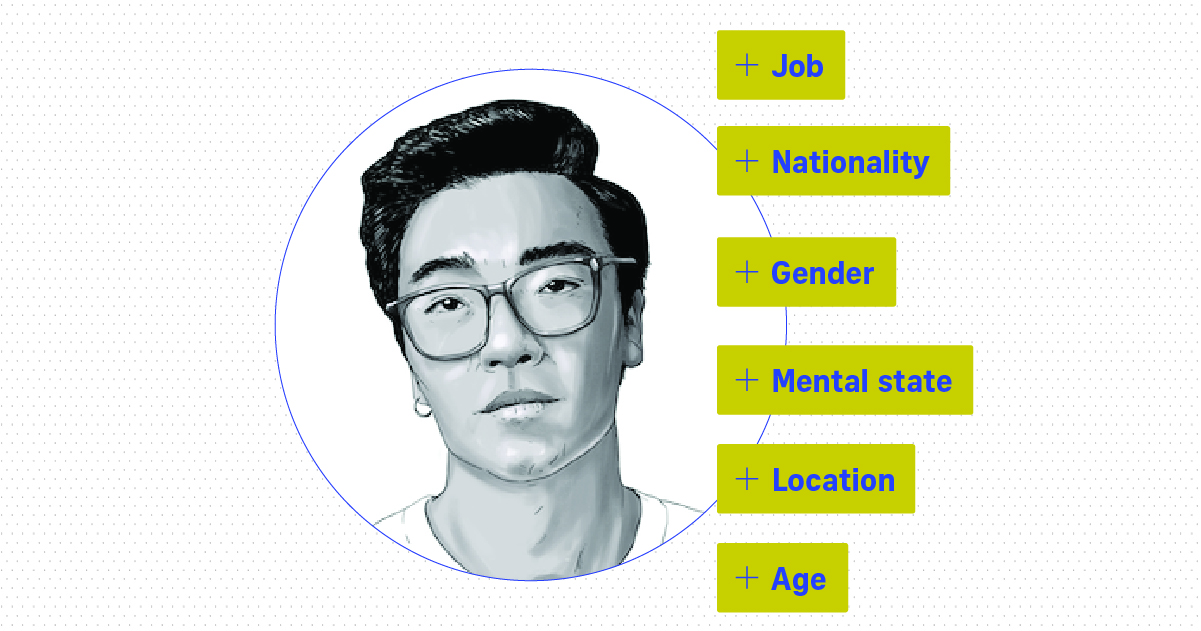
Your chatbot is reading between the lines
🙋♀️ Vote!
Turns out AI chatbots can infer your age, location, job, and relationships just from how you ask questions. Does that change anything for you?
Last week, we asked: Do you think that Section 230 (a law written in 1996 before smartphones, algorithms, and behavioral science shaped platform design) should still govern platform liability today?
You said:
🟨🟨⬜️⬜️⬜️⬜️ Yes, the principles still hold (14%)
🟩🟩🟩🟩🟩🟩 No, it needs a fundamental rethink (36%)
🟩🟩🟩🟩🟩🟩 Reform it, don't replace it (36%)
🟨🟨⬜️⬜️⬜️⬜️ Something else (write in!) (14%)
“I think the principles hold as long as it applies to content generated and shared between users; if there is a service charging for said content exchange then that changes things. I wish we could have a free internet, but it isn't free. Access to service is costly. And consumers are exploited continuously. The big but is: once you start, you can never go back; it's like taxes, they never go away and they never become smaller.”
“Completely replace it based on the unfolding for the next 20 years.”

Last week’s most popular Action Step was learning about the surveillance tech being used in your community with the Atlas of Surveillance.
Donate to the American Farmland Trust to help them promote sustainable farming practices, and support farmers.
Volunteer with Climate Changemakers by signing up to a weekly Hour of Action to find out how you can show up for the climate authentically and effectively.
Get educated with the data you need to build a more walkable, more accessible, healthier community using the resources at Close.
Be heard about bringing back tax incentives for clean energy investment and production.
Invest in organizations committed to a greener future by seeing if your financial institution is on this Carbon Accounting Financials list.
🌎 = Global Action Step
👉 NEW: Find every action recommended in It’s Called Science. right here.
Together With Incogni

Unknown number calling? It’s not random.
The BBC caught scam call center workers on hidden cameras as they laughed at the people they were tricking. One worker bragged about making $250k from victims. The disturbing truth? Scammers don’t pick phone numbers at random. They buy your data from brokers.
Once your data is out there, it’s not just calls. It’s phishing, impersonation, and identity theft. That’s why we recommend Incogni: They delete your info from the web, monitor and follow up automatically, and continue to erase data as new risks appear. Try Incogni today and get 58% off annual plans with code INI58.
Want an ad-free experience? Become a Member!


What’s In Your Water
Whoever said this country can't come together about anything anymore in the year of our Lord twenty twenty-six was wrong because PFAS, or forever chemicals, are in the blood of ninety-seven percent of Americans right now.
They're in our water, our cookware, our food packaging, children, pets. The companies that made them knew they were toxic as early as the 1960s, and the federal government is trying to roll back the drinking water protections we've had for them for about a year, but they're not even in effect yet.
But here's the thing: people are fighting back. Awareness is growing. Communities that were poisoned are building a national coalition right from their kitchen tables. Scientists are literally breaking apart molecules that were designed to last forever, and states are stepping in where the feds will not.
So what can I do about a chemical contamination that's already inside me?
My guest today is Rachel Frazin. Rachel is an energy and environmental reporter at The Hill and co-author of Poisoning the Well: How Forever Chemicals Contaminated America, a new book built on years of original on-the-ground reporting in four contaminated communities across Alabama, Colorado, North Carolina, and Maine.
We're gonna talk about what PFAS are and how they got into virtually all of us, what the companies and the military knew and when they knew it, where regulation stands right now, and what you can actually do to protect your family and to join the people who are demanding that this gets fixed for us and our kids and for later generations.
📖 Prefer to read? Get the transcript here.
▶ Or watch the full episode on YouTube.


Screenshot from the SimEarth gameplay. Credit: Wikipedia.
How a videogame taught my generation that Earth is alive
SimEarth sparked many environmental scientists interest in the field. It was Maxis’s first release after SimCity, but it was more than mere entertainment.
It was co-founder Will Wright’s effort to spread an idea that captivated him: the Gaia Hypothesis, which proposed that Earth is alive.

What Other Species Reveal About Us
For most of medical history, we’ve studied human disease by studying humans. Duh, of course, why wouldn’t we? But it turns out that when medicine starts looking at the DNA of other species, we can unlock so much more knowledge about ourselves.
Tech and climate journalist Tasmin Lockwood returns this week to explore how cross-species biology, supercharged by AI, is beginning to rewrite what we thought we knew, and what the DNA of animals like elephants can tell us about our own health.
💌 Loved this issue of It’s Called Science?
Check out what else we make (or take it easy on the emails, we get it) right in your Subscriber Preferences.
🤝 Thanks for reading. Here’s how we can help you directly:
☎️ Work with Quinn 1:1 (slots are extremely limited) - book time to talk climate strategy, investing, or anything else.
🎯 Sponsor Important, Not Important - reach 41,665 (and counting) sustainably-minded consumers across our newsletters, web, and audio.