


Welcome to the week.
I struggle with putting this newsletter together sometimes, because I really believe in avoiding doom and gloom and focusing on solutions, while also not shying away from the hard stuff that we need to understand before we can do anything about it.
Some weeks all the hard stuff is a lot! My goal is to leave you informed enough to act, and not so overwhelmed you check out. So! With that in mind, let’s get into it.
This Week
And more.
Have a great week,
— Willow
41,630+ people who give a shit got this post in their email, for free.

🙋♀️ Vote!
What do you find most valuable about It's Called Science each week?
Last week, we asked: Turns out AI chatbots can infer your age, location, job, and relationships just from how you ask questions. Does that change anything for you?
You said:
🟨⬜️⬜️⬜️⬜️⬜️ Yes, I'm rethinking what I share (14%)
⬜️⬜️⬜️⬜️⬜️⬜️ Probably not, convenience wins (0%)
🟩🟩🟩🟩🟩🟩 I already assumed this was happening (43%)
⬜️⬜️⬜️⬜️⬜️⬜️ Still processing (3%)
🟨🟨🟨🟨🟨⬜️ I never use them anyways (40%)
🤝 Become an Important Member
We’re 100% independent and proudly supported by readers like you.
Members get a 30 day free trial to:
Ad-free everything
Your What Can I Do? profile: get and keep track of personalized action steps, connect with other Shit Givers
Vibe Check: Our news homepage, curated daily just for you. Never doomscroll again, thx
Seriously?: The frameworks, models, history, and pop culture we use to understand what’s happening now and next
Half Baked: Weekly briefs to help you think and act on specific, timely issues as they happen
Not Important: My favorite books, art, movies, music, apps, and more that have nothing to do with the jet stream slowing down
Lifetime thanks for directly supporting our work

⚡️ Climate change:
Batteries are having their moment, with plummeting costs, data center hunger, and war-driven surge in fossil fuel prices making this the year for grid-scale storage. (Bloomberg)
As the climate crisis intensifies, newsrooms are gutting climate teams, defunding coverage, and filling conference schedules with everything but the story that connects to all others. (Drilled)
The clean energy transition has a human cost, and whether the shift breaks communities or transforms them depends on whether governments step up to manage the fallout. (The Climate Brink)
The cost of climate change is already showing up at the grocery store, as economists trace a direct line from record heatwaves to your bill. (Bloomberg)
🦠 Health & Bio:
We have the tools to end HIV in the US. A 99% effective pill, telehealth, and injectable options are right there, but stigma and funding cuts keep moving the finish line farther away. (Vox)
A personalized mRNA vaccine for pancreatic cancer is showing some real promise. Six years out, most patients who responded are still alive. (NBC News)
Gun violence is a predictable, data-driven public health crisis with known risk factors and proven interventions (that we’re just not using). (Your Local Epidemiologist)
Clinical trials are drowning in regulatory bureaucracy, and the fix to speed things up isn’t AI, but boring structural reforms like running small trials run the way Australia has for 30 years. (The Works in Progress)
💦 Food & Water:
🌍 In Ghana’s cocoa belt, ending deforestation is as simple as giving farmers a reason to leave trees standing (bees, fruit trees, extra income). (WRI)
California wants to use solar to power the massive pumps that deliver water to 27 million people, but the catch is water bills are going up, and the federal tax credits making it possible are almost gone. (LA Times)
🌎 Families in Brazil are discovering that restoring the Amazon and putting food on the table aren’t competing goals. (WRI)
The EPA has stacked its science advisory board with pesticide and forever chemical industry people. (Civil Eats)
🦜 Biodiversity:
Five bird species thought to be extinct for two decades were photographed alive in 2025, a discovery largely powered by citizen scientists using birding apps. (Mongabay)
🌏 An Indigenous Australian is rebuilding Earth’s largest organism using sea cucumbers, ancient trade knowledge, and a vision of giving his people meaningful work in the water they’ve always called home. (Conservation International)
An AI system listens for orcas so construction crews can pause and boat traffic can reroute before whales even arrive. (Mongabay)
🌎 Native rats disappearing from Madagascar forests allows invasive black rats to move in, which is a public health warning, as the species who live in the forest shape what diseases spread to humans. (Mongabay)
👩💻 Beep Boop:
AI chatbots ace medical exams but fall apart in real conversations, giving wrong answers two-thirds of the time when actual humans describe their symptoms in the messy, incomplete way people actually do. (BBC)
Just 11 data center campuses linked to OpenAI, Meta, Microsoft, and xAI could emit more greenhouse gases per year than ENTIRE COUNTRIES, and by bypassing the grid, they may also be bypassing regulations. (WIRED)
🌎 Netflix’s acquisition of AI is a threat to the frame-by-frame artists in India, South Korea, and Latin America who do the invisible work of cinema, and they don’t have a union to fight back. (Rest of World)
🌏 China’s AI phone controversy reveals the fundamental dilemma of agentic AI everywhere: that the same device access that makes these assistants useful is what makes them a privacy and security nightmare. (Lawfare Media)
🌎 = Global news

Stop calling it a spending problem

Last week’s most popular Action Step was checking to see if your financial institution is committed to disclosing their greenhouse gas emissions using Carbon Accounting Financials.
Donate to the COVID Longhauler Advocacy Project to ensure treatments, research, and support are prioritized by governments.
Volunteer with the Environmental Voters Education Fund to get out the vote for climate action.
Get educated about what’s in your water by finding your local water system in EWG’s Tap Water Database.
Be heard about boosting housing supply and bringing affordable homes within reach by getting your representatives to vote for the 21st Century ROAD to Housing Act.
Invest in financial institutions that align with your values using bank.green.
👉 NEW: Find every action recommended in It’s Called Science. right here.
Together With Incogni

Unknown number calling? It’s not random.
The BBC caught scam call center workers on hidden cameras as they laughed at the people they were tricking. One worker bragged about making $250k from victims. The disturbing truth? Scammers don’t pick phone numbers at random. They buy your data from brokers.
Once your data is out there, it’s not just calls. It’s phishing, impersonation, and identity theft. That’s why we recommend Incogni: They delete your info from the web, monitor and follow up automatically, and continue to erase data as new risks appear. Try Incogni today and get 58% off annual plans with code INI58.
Want an ad-free experience? Become a Member!


A Calm Voice In A Loud World
Your kids are hearing about the news whether you are ready or they're ready or not. One study said two-thirds of kids aged 8 to 14 are absorbing current events at least every few days, and almost none of it was made for them.
They're getting the fear without the context, the headlines without any nuance, and the algorithms without any sort of filter, and in a country arguing over whether to teach history or ban books.
The question of who helps kids make sense of the world has never been more necessary and urgent.
So what can I do to help the next generation build a healthy, lasting relationship with news and information?
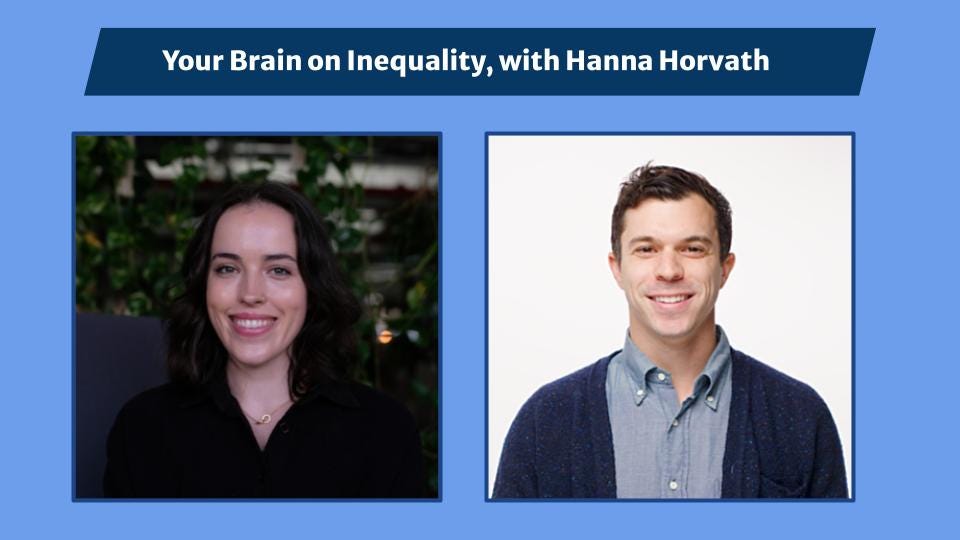
Today's guest is Andrea Barbalich. Andrea is the editorial director of The Week Jr., the only weekly news magazine reporting current affairs directly to children, ages 8 to 14. Under Andrea's leadership, it has grown to over 155,000 subscribers.
Andrea's got 25 plus years in editorial leadership at places like Child Magazine. She's also the editor of a book called Feeling Safe: Talking to Children About War and Terrorism.
We talk about how you explain wars and elections and climate change to an 8-year-old without either terrifying them or talking down to them, why a physical magazine is thriving in a world of 8 second attention spans, and what every parent, grandparent, teacher, coach, and more can do this week to help the kids in their lives become informed, curious, and resilient.
📖 Prefer to read? Get the transcript here.
▶ Or watch the full episode on YouTube.


‘The Expanse’ authors explain how a Bible story and a biology degree inspired their latest novel
Alien invasions are such a common sci-fi plot line, most of us can write about them in our sleep.
Our stories usually go like this: Advanced extraterrestrials show up out of nowhere and launch a devastating attack on Earth. Humanity fights back and improbably finds a way to beat its cosmic foe, often with the help of stolen weaponry and a maverick scientist or two. Ultimately, the invaders are rebuffed, and Earth emerges stronger and more united than ever.
From the get-go, it’s clear that Daniel Abraham and Ty Franck’s new series, The Captive’s War, is no ordinary alien invasion tale. The Science of Fiction spoke with Abraham and Franck about what inspired The Captive’s War, how the duo weave real science into far-out space operas, and why arrogant academics are certain to follow us across the galaxy

Every Body Is A Sex Spectrum
Watch a cassowary and it feels as if you’ve slipped backwards through time.
The crested, flightless, shaggy-feathered birds look as if they have stepped right out of the Cretaceous. The fact that they are known for slashing bothersome humans with their sharp toe claws, Velociraptor style, certainly underscores the fact that dinosaurs never really left and still strut among us as birds.
It’s so easy to get caught up in how primordial the colorful birds seem that it’s easy to miss an aspect of their biology that directly contradicts the notion that biological sex is binary.
💌 Loved this issue of It’s Called Science?
Check out what else we make (or take it easy on the emails, we get it) right in your Subscriber Preferences.
🤝 Thanks for reading. Here’s how we can help you directly:
☎️ Work with Quinn 1:1 (slots are extremely limited) - book time to talk climate strategy, investing, or anything else.
🎯 Sponsor Important, Not Important - reach 41,630 (and counting) sustainably-minded consumers across our newsletters, web, and audio.